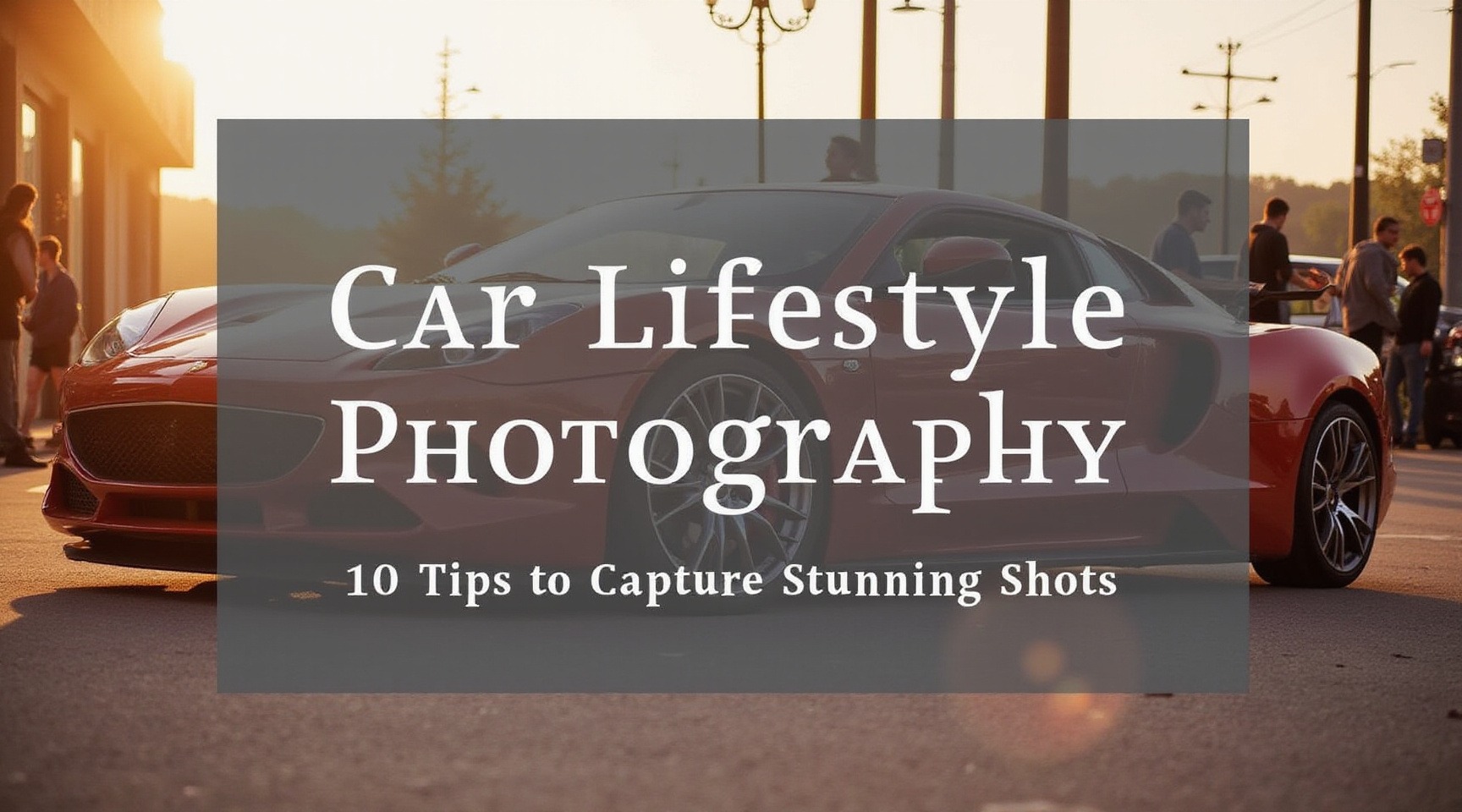
A great photograph of an automobile isn’t about the machine. Not really. It’s about the story the machine tells. It’s the promise of an open road, the quiet confidence of its design, the reflection of a city skyline in its polished paint. This is the art of car lifestyle photography—a discipline that separates sterile catalog images from portraits with a pulse. It’s about capturing not just a vehicle, but a feeling.
You don’t need a studio packed with expensive gear to create these images. Quite the opposite. Resourcefulness breeds creativity. With the right eye and a few clever techniques, you can produce compelling automotive stories that resonate with style and substance. Forget the five-figure lighting rigs. We’re here to talk about creating magic with what you have. Here are ten ways to sharpen your skills and shoot stunning car photos on a budget.
1. See the Story, Not Just the Car
Before you even lift the camera, you must understand the core idea. Car lifestyle photography is narrative-driven. Are you shooting a rugged 4×4? The story is about adventure, untamed landscapes, and mud-splattered freedom. A vintage convertible? The story is one of nostalgia, classic romance, and wind-in-your-hair escapism.
Every choice you make—location, light, props, composition—should serve this narrative. Ask yourself: What life does this car lead? Who drives it? Where is it going? A photograph that answers these questions has depth. It invites the viewer into a world, making them feel the grit, the speed, or the elegance. This approach transforms a simple picture of a car into a piece of visual poetry. The vehicle becomes a character, not just an object.
2. The Smart, Lean Camera Kit
The gear conversation can be intimidating, but it doesn’t have to be. Excellence comes from the artist, not the tools. You can assemble a powerful kit without emptying your bank account.
- Your Camera: Any DSLR or mirrorless camera that offers manual control is your ticket to the game. An entry-level model from a reputable brand is more than enough to produce professional-quality images. Even modern smartphones with pro-mode apps offer surprising control over settings like shutter speed and ISO.
- The Go-To Lens: A 50mm f/1.8 prime lens, often called the “nifty fifty,” is a brilliant and affordable investment. Its wide aperture creates a beautiful separation between your subject and the background, giving your photos a cinematic quality. For more versatility, a standard 18-55mm kit lens can work wonders, especially when you understand its limitations and strengths at different focal lengths.
- The Essential Stabilizer: A sturdy tripod is non-negotiable, especially for shooting in low light. It allows you to use slower shutter speeds without camera shake, resulting in crisp, clean images. It also forces you to slow down and think more deliberately about your composition.
- The Secret Weapon: A circular polarizing filter (CPL) is perhaps the most impactful, budget-friendly accessory you can buy. Screw it onto your lens, rotate it, and watch as distracting reflections on the paint and glass simply vanish. It also deepens blue skies and boosts color saturation, giving your images an instant professional polish.
3. Command Your Camera’s Settings
Automatic mode is a suggestion, not a command. To truly control your creative vision, you need to speak your camera’s language. This means shooting in Manual (M) or Aperture Priority (A/Av) mode.
- Aperture (f-stop): This controls how much of your scene is in focus. For a classic lifestyle shot where the car is the hero and the background is a soft blur, use a wide aperture like f/1.8 or f/2.8. To capture the car within a majestic landscape where both are sharp, you’ll want a narrower aperture, such as f/8 or f/11.
- Shutter Speed: This is your tool for controlling motion. For a static shot, a speed of 1/125s or faster will keep things sharp. If you want to create a sense of speed with a moving car, you’ll experiment with “panning.” This technique involves using a slower shutter speed (like 1/30s) while following the car’s movement with your camera. The result is a sharp car against a beautifully blurred background.
- ISO: This setting determines your camera’s sensitivity to light. Keep it as low as possible (ISO 100 or 200) for the cleanest, most detailed images. Only increase it when you’re shooting in darker conditions and can’t use a tripod.
- Shoot in RAW: JPEGs are convenient, but they are compressed files where the camera makes permanent decisions about color and sharpness for you. RAW files are the digital equivalent of a film negative—they capture all the data from the sensor. This gives you enormous flexibility in post-processing to adjust exposure, recover details from shadows, and fine-tune colors without degrading the image quality.
4. Become a Master of Light
Light is your paintbrush. Learning to find, shape, and manipulate it is the defining skill of a great photographer. The best light is almost always free.
- Chase the Golden Hour: The period shortly after sunrise and before sunset is known as the golden hour. The light during this time is soft, warm, and directional, casting long, dramatic shadows. It wraps around the car’s curves, highlighting its form and texture in a way that harsh midday sun never could. It’s the cheat code for beautiful photos.
- Embrace the Overcast Day: A bright, overcast sky is nature’s softbox. The clouds diffuse the sunlight, creating soft, even light with minimal reflections and harsh shadows. This is perfect for showing off a car’s true color and design lines without battling glare.
- DIY Lighting Hacks: You don’t need strobes. A large, white foam board from an art supply store can serve as a reflector, bouncing light into shadowy areas to reveal more detail. For night shoots, try light painting. Set your camera on a tripod for a long exposure (10-30 seconds), and then “paint” the car with a continuous beam from a flashlight or LED wand. This technique creates stunning, otherworldly images that look like they came from a high-end commercial shoot.
5. Compose with Intent and Style
Composition is the art of arranging elements within your frame to guide the viewer’s eye and tell a story. Strong composition is what makes a photograph feel balanced, dynamic, and intentional.
- Find the Right Angle: Don’t just shoot at eye level. Get low to the ground to make the car look more powerful and heroic. The three-quarter angle is a classic for a reason—it shows both the front and side of the car, giving a strong sense of its shape and dimension. Experiment with shooting through foreground elements, like foliage or architecture, to create a sense of depth.
- Use the Environment: The background is not just a backdrop; it’s part of the narrative. A winding mountain road, a gritty urban alley, or a serene coastal highway all contribute to the car’s story. Position the car so that leading lines in the environment—like the edge of a road, a fence, or a building—draw the viewer’s eye toward it.
- Incorporate Lifestyle Elements: This is where the “lifestyle” part comes alive. A pair of driving gloves on the passenger seat, a vintage suitcase in the trunk, or a person looking out toward the horizon from beside the car all add a human element. These details suggest a purpose and a journey, transforming the image from a static portrait to a moment captured in time.
6. Look Closer: The Beauty of Interiors and Details
The soul of a car is often found in its details. The intricate stitching on a leather seat, the cold touch of a machined aluminum shifter, the elegant sweep of a dashboard—these are the elements that create a tactile connection.
Shooting the interior well requires attention to light and space. Park the car so that soft, natural light spills through the windows. Use a wide-angle lens to capture the sense of the cabin’s space, but be careful not to distort it too much.
Then, switch your focus. Get close. Capture the texture of the steering wheel, the design of the gauges, the emblem on the headrest. These detail shots add richness and variety to your photo set. They tell the story of the car’s craftsmanship and personality. When combined with wider shots, they create a complete and compelling portrait that honors the full experience of the vehicle. These shots are critical for a full appreciation of auto lifestyle.
7. Shoot with the Clock and the Calendar
The environment changes dramatically depending on the time of day and the season. A skilled photographer uses this to their advantage. We’ve discussed the golden hour, but its cousin, the blue hour—the period just before sunrise and after sunset—offers a completely different mood. The cool, ambient light can give your photos a serene, moody, and sophisticated feel, especially when contrasted with the warm glow of the car’s headlights.
Night photography in an urban setting provides a canvas of neon lights, street lamps, and light trails from other traffic. A long exposure can turn a busy city street into a river of light, with your subject car as a sharp, stable island in the middle of the flow.
Think seasonally. The vibrant colors of autumn foliage can create a warm, rustic backdrop for a classic touring car. The stark, clean lines of a snowy landscape can beautifully complement a modern, minimalist vehicle design. By aligning your shoots with the calendar, you add another layer of narrative and visual interest.
8. The Art of the Subtle Edit
Post-processing is where you develop your photograph’s final mood and polish. The goal is to enhance, not to fabricate. With powerful and often free tools like Snapseed on mobile or DaVinci Resolve’s free version for color grading, you have everything you need.
- Start with the Basics: Begin by adjusting exposure, contrast, and white balance to ensure the image is technically sound. Lift the shadows slightly to bring out detail and gently lower the highlights to retain information in the brightest areas.
- Color and Tone: This is where your artistic style emerges. Do you want a warm, vintage feel or a cool, modern aesthetic? Use color grading tools to subtly shift hues and saturation. A split-toning effect, where you add one color to the shadows and a complementary color to the highlights, can create a very cinematic look.
- Sharpen with Precision: Apply sharpening last. Don’t just use a global slider that sharpens everything. Use a masking tool to apply sharpening only to the important edges of the car, like the badges, grilles, and design lines. This keeps the soft areas like the sky and blurred background looking smooth.
A photograph isn’t complete until it’s seen. Building a portfolio is about showing your unique vision and skill. Platforms like Instagram and Behance are perfect for visual storytelling.
Don’t just post a single image. Create a carousel post that tells a complete story. Start with a powerful wide shot, move into interior and detail shots, and end with another compelling angle. Write captions that add context and share the story behind the shoot.
Use hashtags strategically to connect with the wider automotive and photography communities. Engage with other creators, offer thoughtful feedback, and build a network. A strong online presence can lead to collaborations, new opportunities, and a community that appreciates your work. Your portfolio is your visual voice—make it speak clearly and confidently.
10. Wear Your Passion: Gear and Gifts for the Craft
As you deepen your involvement in car lifestyle photography, your identity as a creator grows. This passion extends beyond the camera. It becomes part of your style. Consider practical gear that also serves as a statement of your craft. A quality camera bag is a start, but think about the community aspect.
Well-designed apparel, like a minimalist hoodie or a comfortable sweatshirt emblazoned with a subtle nod to automotive photography, becomes a sort of uniform for your passion. It connects you to a tribe of like-minded creators. This kind of gear also makes for a perfect gift. For holidays, Father’s Day, or a birthday, gifting a set of editing presets, a high-quality polarizing filter, or stylish photographer apparel is a thoughtful way to support a friend’s or family member’s creative pursuits. It’s a gift that says, “I see your passion, and I want to help you pursue it.”
The Final Frame
Ultimately, creating stunning car lifestyle photography on a budget is not about limitations. It’s about ingenuity. It’s about training your eye to see the stories that others miss and using simple tools with precision and artistry.
Practice these techniques. Experiment with light, angle, and narrative. Develop your own style. The world is your studio, and every car has a story waiting to be told. Now, go out and capture it.
What’s the one car you’ve always dreamed of shooting, and what story would you tell with it? Share your thoughts below.