In a landscape where automotive content saturates digital feeds, quality photography stands as the differential between scrolling past and stopping to engage. The perfect car photo combines technical skill, artistic vision, and an instinct for what resonates on social media. Whether you’re showcasing your personal vehicle or building a photography portfolio, mastering automotive imagery requires understanding both the machine and the medium.
This guide bridges the gap between professional automotive photography techniques and social media application, offering practical insights for creating standout content that captures the essence of automotive lifestyle across platforms.
The Foundation: Equipment That Delivers
Camera Choices: Finding Your Perfect Match
The camera debate often centers on complexity versus accessibility. Professional automotive photographers typically use full-frame cameras for their superior low-light performance and depth of field control. The Canon EOS R5 or Sony A7 IV offer exceptional dynamic range that captures both gleaming highlights and shadow details on vehicles.
For those starting out, mid-range mirrorless cameras like the Fujifilm X-T4 provide an excellent balance of image quality and portability.
Smartphone photography has evolved dramatically, with devices like the iPhone 14 Pro and Samsung Galaxy S23 Ultra featuring computational photography that rivals entry-level DSLRs. Their advantage lies in immediacy and connectivity—shoot and share within minutes.
Alex Carmichael, automotive photographer for Car & Driver, notes: “”The gap between professional cameras and smartphones narrows yearly. The best camera remains the one you have with you and know how to use well.””
Lenses: Framing Your Vision
Lens selection dramatically affects how vehicles appear in frame:
- 24-70mm zoom: The workhorse range that covers everything from environmental shots to tight three-quarter views
- 70-200mm telephoto: Creates compression that flatters car proportions and isolates vehicles against backgrounds
- 16-35mm wide-angle: Captures dramatic interior shots and emphasizes car design features
- 50mm prime: Offers natural perspective similar to human vision with excellent light-gathering capability
For smartphone photographers, clip-on lens attachments from brands like Moment provide wide-angle and macro options that expand creative possibilities without significant investment.
Lighting Equipment: Controlling the Mood
Natural light remains the most accessible and flattering light source for vehicles. However, supplementary tools transform ordinary conditions into optimal shooting environments:
- 5-in-1 reflector: Bounces existing light to fill shadows under bumpers and wheel wells
- LED light panels: Portable, battery-powered illumination for detail shots and interior photography
- Light wands: Create striking highlights that accentuate body lines and curves
“”Your car’s surfaces are essentially mirrors,”” explains automotive photographer Amy Rodriguez. “”Understanding how light interacts with them is more important than expensive equipment.””
Location Scouting: The Perfect Backdrop
Urban Environments: Industrial Elegance
Urban locations provide context that complements modern vehicles. Look for:
- Clean concrete structures with minimal markings
- Brick walls with consistent patterns
- Geometric architectural elements that echo vehicle design
- Parking garages with striped light patterns during day
- Empty downtown streets during early morning hours
Many photographers scout locations through Google Street View before visiting in person—saving time and identifying potential issues with access or background elements.
Natural Settings: The Environmental Portrait
Natural settings create an aspirational quality that performs exceptionally well on social media:
- Coastal roads with ocean backdrops for luxury vehicles
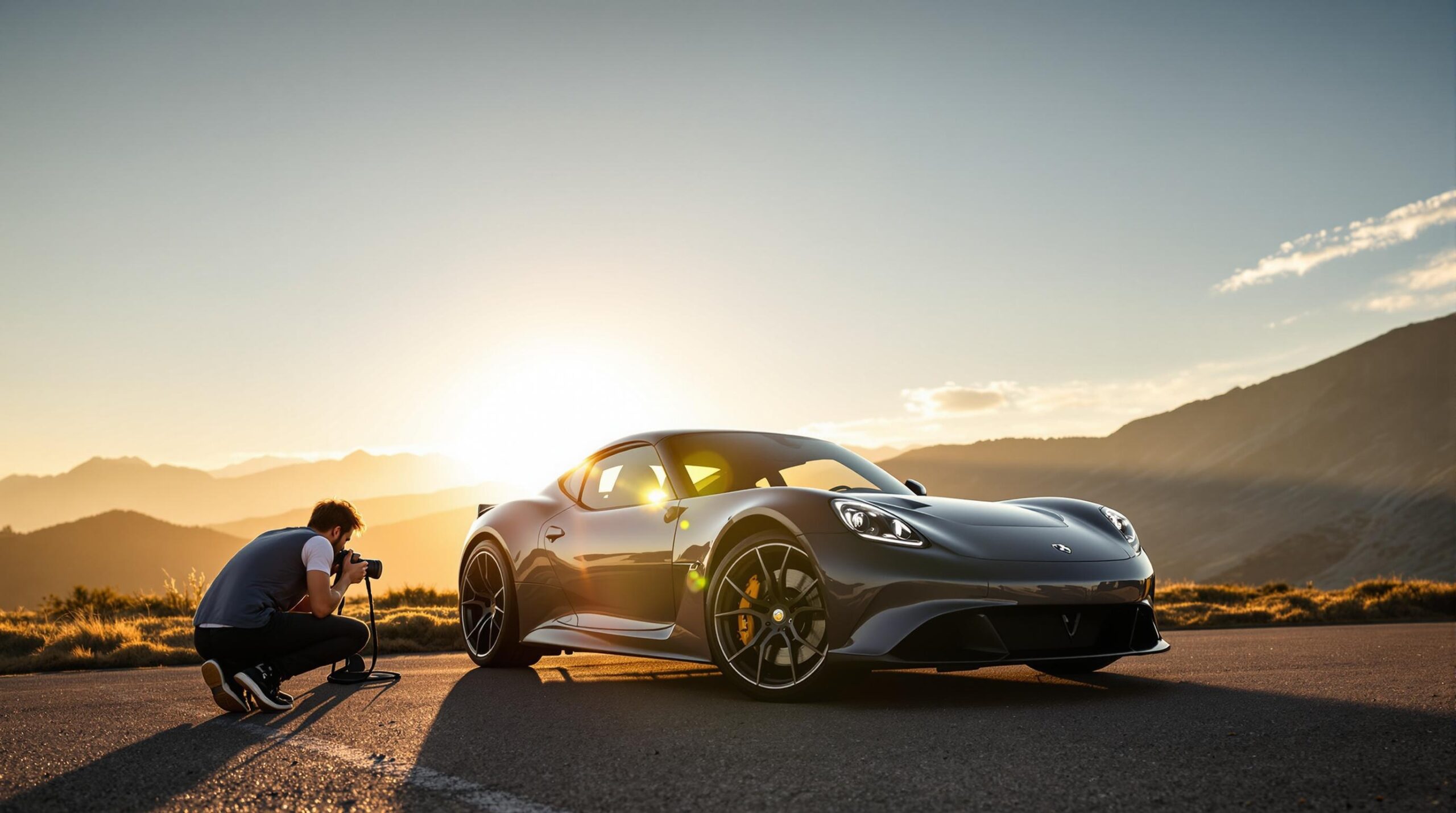
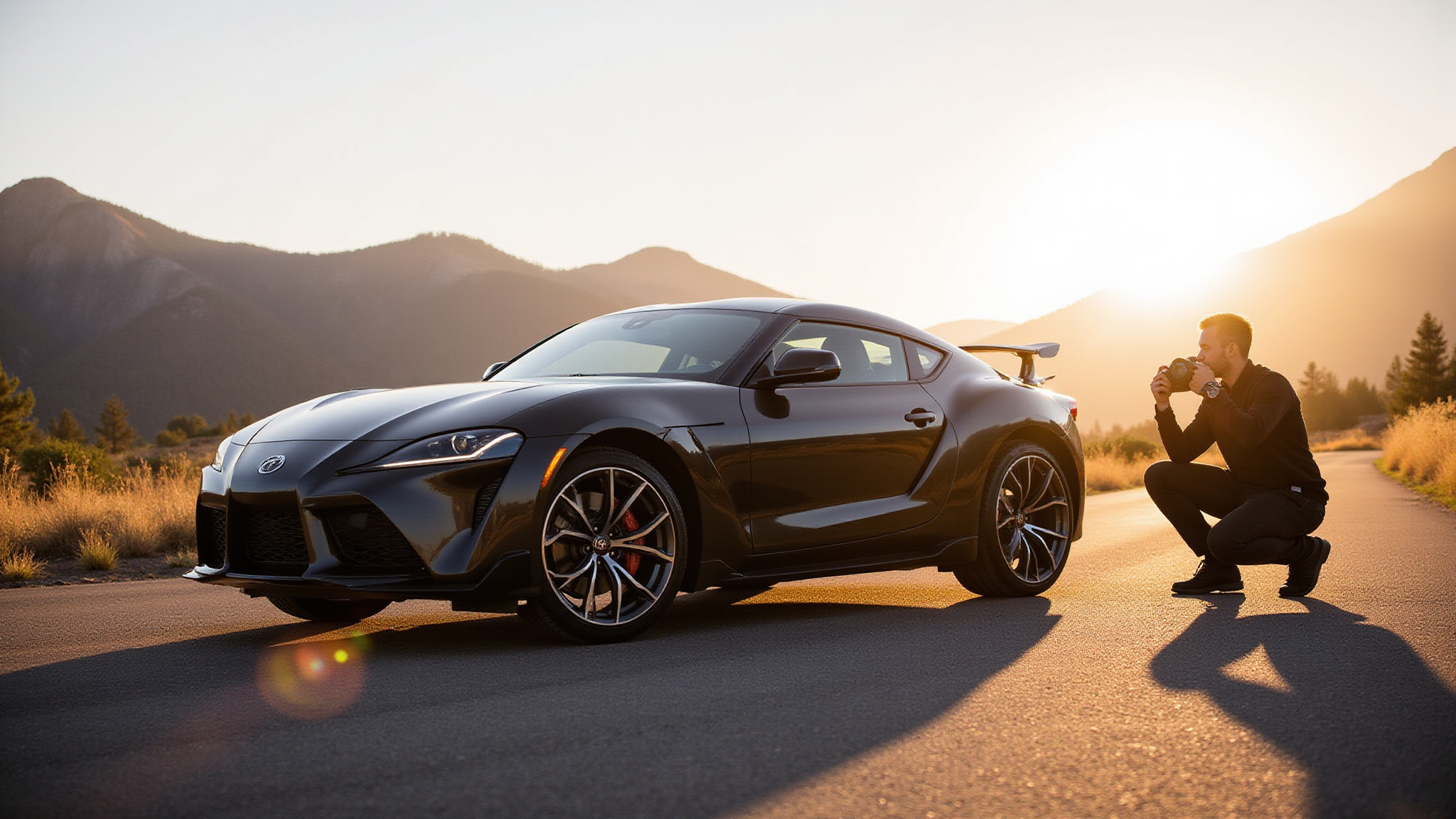
- Winding mountain passes for sports cars and performance vehicles
- Open desert landscapes for SUVs and adventure vehicles
- Forest roads for vehicles with outdoor lifestyle positioning
The location should tell a story about the vehicle’s purpose rather than simply serving as a pretty background.
Time of Day: The Light That Transforms
The quality of light fundamentally changes how vehicles appear in photographs:
- Golden hour (first hour after sunrise, last hour before sunset): Produces warm, directional light that accentuates vehicle contours
- Blue hour (just before sunrise, just after sunset): Creates dramatic atmosphere with balanced ambient light and artificial lighting
- Overcast conditions: Provides soft, diffused light that minimizes harsh reflections on paint
Professional photographers often visit locations multiple times to understand how light interacts with the environment throughout the day.
Technical Techniques: Making Vehicles Look Their Best
Composition Principles: Beyond Basic Rules
While the rule of thirds provides a starting framework, automotive photography often benefits from these specific approaches:
- Position headlights at key intersections in your frame
- Allow “”breathing room”” in the direction the car faces
- Include reflections that complement rather than distract
- Use negative space to emphasize vehicle silhouettes
According to commercial photographer Jason Torres: “”Cars have personalities—front ends can appear aggressive, playful, or sophisticated. Compose your shot to emphasize these characteristics.””
Perspective Mastery: Understanding How Angles Affect Perception
Different angles communicate different aspects of a vehicle’s character:
- Eye-level: Creates a natural, relatable view
- Low angle: Emphasizes power and presence
- High angle: Showcases overall design and context
- Detail focus: Highlights craftsmanship and specific design elements
The classic three-quarter view (showing the front and side simultaneously) remains popular because it displays both the face and profile of the vehicle, but don’t limit yourself to this conventional angle.
Creating Dynamic Impressions: Movement and Action
Static vehicles can still convey motion through:
- Panning shots: Following a moving car with a slower shutter speed (1/15-1/60) while keeping the vehicle in focus
- Rolling shots: Photographing from another vehicle moving alongside
- Implied motion: Using compositional elements like converging lines or motion blur in the background
These techniques perform particularly well in video format for platforms like Instagram Reels and TikTok, where movement naturally captures attention.
Camera Settings: Technical Foundations
Static Photography: Maximize Detail and Clarity
For parked vehicles in good light:
- Aperture: f/8 to f/11 ensures sharp focus throughout
- ISO: 100-400 minimizes noise while maintaining image quality
- Shutter speed: At least 1/125 to eliminate camera shake
- White balance: Auto with fine-tuning in post-processing
Moving Vehicle Settings: Capturing Action
For vehicles in motion:
- Shutter priority mode: 1/15 to 1/30 for panning shots with background blur
- Continuous autofocus: Tracks moving subjects
- Burst mode: Captures multiple frames to select the perfect moment
- Image stabilization: Activated when shooting handheld
Advanced photographers can explore specialized techniques like light painting at night, where long exposures combined with moving light sources create dramatic effects around vehicles.
Preparation and Styling: The Difference Is in the Details
Vehicle Preparation: Creating the Perfect Subject
Your preparation directly impacts image quality:
- Wash thoroughly with proper automotive detailing products
- Apply tire shine for consistent black finish on rubber
- Clean glass surfaces inside and out to minimize distracting reflections
- Remove interior clutter that might appear in cabin shots
Professional photographers often carry quick-detailing spray and microfiber cloths to address last-minute imperfections.
Environmental Integration: Creating Authentic Lifestyle Context
Social media audiences respond to authenticity:
- Include lifestyle elements that complement the vehicle’s purpose
- Position the car in environments where it would naturally be found
- Consider seasonal appropriateness (winter tires in snow scenes)
- Incorporate human elements selectively to add scale and relatability
The most successful automotive content creators build narratives around vehicles rather than simply documenting them.
Post-Processing: Refining Your Vision
Essential Editing Sequence: From RAW to Ready
A structured editing workflow ensures consistency:
- Basic adjustments: Exposure, contrast, white balance
- Localized corrections: Highlight recovery on chrome, shadow detail enhancement
- Selective color work: Sky enhancement, paint color accuracy
- Distraction removal: Sensor spots, background elements
- Sharpening and noise reduction: Applied selectively for clean final images
Platform-Specific Considerations: Optimizing for Visibility
Different platforms favor different formats:
- Instagram: Square (1:1) for feed posts, vertical (9:16) for Stories and Reels
- Facebook: Horizontal (16:9) performs well in feeds
- TikTok: Vertical video (9:16) with quick-cut edits showing process and results
- Pinterest: Vertical pins (2:3) for better display in search results
Each platform also processes color and contrast differently—preview content on mobile devices before publishing.
Building Visual Consistency: Creating a Recognizable Style
Developing a signature look helps build audience recognition:
- Create custom presets that maintain consistent color grading
- Establish patterns in composition across multiple posts
- Develop a rhythmic posting strategy that audiences anticipate
Successful automotive content creators don’t just post random beautiful car photos—they build visual stories that unfold over time.
Social Media Strategy: Beyond the Perfect Shot
Content Planning: Building Momentum
Strategic planning maximizes engagement:
- Mix professional quality images with authentic behind-the-scenes content
- Use Instagram carousels to tell sequential stories about vehicles
- Alternate between exterior, interior, detail, and action shots
- Create content around automotive events and seasonal themes
The most successful automotive accounts post consistently rather than sporadically.
Engagement Techniques: Building Community
Photography quality opens doors, but engagement builds audience:
- Use specific automotive hashtags beyond generic #carphotography
- Tag manufacturers and feature accounts that might repost your work
- Respond thoughtfully to comments with genuine conversation
- Share your process and learning experiences
Many successful automotive photographers attribute their growth to community participation rather than simply posting excellent images.
Common Mistakes: Learning From Others’ Experiences
Technical Missteps: Sabotaging Your Results
Avoid these frequent errors:
- Focusing on reflections rather than the actual vehicle
- Choosing locations with distracting elements (power lines, trash cans)
- Shooting at eye level for every photo rather than varying perspective
- Ignoring background elements that appear to “”stick out”” of vehicles
Content Strategy Errors: Missing Audience Connection
Even beautiful photography fails without:
- Consideration of platform-specific formats
- Consistency in posting schedule
- Engaging captions that provide context or ask questions
- Clear purpose beyond simply documenting vehicles
Photography quality matters tremendously, but context and presentation determine whether quality translates to engagement.
Putting It All Together: Your Automotive Visual Journey
The intersection of automotive passion and photography skill creates compelling content that stands out in crowded social feeds. Start with fundamentals—clean composition, appropriate settings, and thoughtful editing—then develop your unique perspective on automotive culture.
The most successful automotive photographers don’t simply document cars; they capture experiences, emotions, and aspirations. Whether you’re showcasing your personal vehicle or building a portfolio, focus on storytelling through your images.
What story will your automotive photography tell? The answer lies in finding your unique perspective on the machines that fascinate us all.
Frequently Asked Questions
What’s the minimum camera equipment needed for quality car photography?
A smartphone with manual camera controls, a basic cleaning kit for the vehicle, and a polarizing filter attachment will get you started. Focus on mastering light and composition before investing in expensive equipment.
How can I eliminate reflections on car surfaces?
Use a circular polarizing filter (physical or digital), shoot during overcast days, position the car away from bright objects, and consider using black cards (large pieces of black foam board) to create controlled dark reflections.
What’s the best time of day for photographing cars?
Golden hour (hour after sunrise or before sunset) provides warm, directional light that accentuates vehicle contours. Blue hour (just after sunset) works beautifully for shots incorporating headlights and ambient city lighting.
How do I approach car owners for collaboration?
Build a small portfolio first, then approach through social media or at car meetups. Offer free photos in exchange for access initially, being specific about which vehicles interest you and what creative vision you have.
What editing software is best for automotive photography?
Adobe Lightroom provides excellent cataloging and basic adjustments, while Photoshop offers advanced compositing and retouching. For beginners, free alternatives like Snapseed (mobile) or Darktable (desktop) offer powerful editing capabilities without subscription costs.